You are here Biopharmaceutical/ Genomics glossary homepage/Search > Technologies > Biopharmaceutical Sequencing

Sequencing for biopharmaceuticals Glossary & taxonomy
Evolving Terminology for Emerging Technologies

Comments? Suggestions Revisions? Mary Chitty  mchitty@healthtech.com
Last revised September 16, 2008.


New Page 1

Please register for CHI's Genomics Glossaries & Taxonomies website. This sign-in box with then disappear from each page, if you accept cookies. Use of this site will continue to be free, but better demographic data on who is accessing this material helps us to justify the expense of maintaining this resource. Registration policy has details.

Registered users of the Genomics Glossaries & Taxonomies will automatically be signed up for CHI's complimentary email monthly newsletter, GenomeLink, unless you choose to opt out of receiving it.

Mr.     Ms.     Mrs.     Dr.     Prof.

First:


Last:

Title:

Dept.:

Company:

Address:

City:

State:

Zip:

Country:

Email:

Opt-out of Email

YES    NO

Telephone:

Would you like to receive CHI event updates via fax? 
Yes       No 

Fax:


The "race" to sequence the Human Genome was not a 100 yard dash, but a marathon.  Although the Human Genome Project finished well ahead of schedule, and a number of genes have been identified, we have just begun to get a glimpse of what specific genes do and how we might be able to better use this knowledge for therapeutic interventions.  Teasing apart the interactions of  genes and proteins, delineating changes throughout the cell cycle, and correlating changes with health and disease will take even more time.  But with complete sequences, and the cross- species comparisons we can expect new insights and speeding up over time. Sequencing DNA is only a first step towards finding what functions are connected with specific sequences. Sequencing proteins (and determining the structures  – and functions of proteins) is ongoing.  Sequencing of carbohydrates is even more difficult.

Applications  Technologies   Map: Finding guide to terms in these glossaries  Site Map
Related glossaries include
  Applications  Functional genomics, Proteomics
Informatics Algorithms  Bioinformatics,  In silico & molecular modeling
Technologies Chromatography & electrophoresis, Mass spectrometry
Biology  Proteins, Protein Structures, SNPs & genetic variations, Sequences - DNA & beyond  

alignment: The process of lining up two or more sequences to achieve maximal levels of  identity (and conservation, in the case of amino acid sequences) for the purpose of assessing the degree of similarity and the possibility of homology.  [NCBI Bioinformatics]

Narrower terms:  global alignment, local alignment, optimal alignment, pairwise alignment. Related terms BLAST, BEAUTY, BLAST2, FASTA, gapped BLAST, Needleman - Wunsch, Smith - Waterman alignment

annotation: Bioinformatics glossary

assembled: The term used to describe the process of using a computer to join up bits of sequence into a larger whole. Peer Bork, Richard Copley "Filling in the gaps" Nature 409: 218-820, 15 Feb. 2001

This is different from assembly language, and the source of some confusion between biologists and computer scientists.

Related term contig assembly

automation: See sequencers- automation

BEAUTY BLAST Enhanced Alignment Utility:  An enhanced version of the NCBI's BLAST database search tool. BEAUTY, when used to search three new custom sequence databases that we have developed, incorporates information on sequence family membership, the location of the conserved domains, and the locations of any annotated domains and sites directly into BLAST search results. These enhancements make it much easier to detect weak, but functionally significant, matches in BLAST database searches. http://searchlauncher.bcm.tmc.edu:9331/seq-search/Help/beauty.html

BLAST (Basic Local Alignment Search Tool): Software program from NCBI for searching public databases for homologous sequences or proteins. Designed to explore all available sequence databases regardless of whether query is protein or DNA. http://www.ncbi.nlm.nih.gov/BLAST/

Faster but less rigorous than FASTA or Smith- Waterman 

BLAST2: A newer release of BLAST that allows insertions or deletions in the aligned sequences. Gapped alignments may be more biologically significant. Synonymous with gapped BLAST 

BLAT: BLAST Like Alignment Tool, Jim Kent http://www.genomeblat.com/genomeblat/index.asp 

base caller: A programs that analyzes trace data in chromatogram files and assigns a base for each peak. Some programs, for example, Phred and TraceTuner also produce a corresponding quality value for each base. DNA Sequence Glossary Geospiza  http://www.geospiza.com/support/glossary.htm 

chain termination sequencing method: See Sanger sequencing (under Maxam- Gilbert & Sanger).

chemical cleavage sequencing: See Maxim- Gilbert sequencing.

chemical degradation sequencing: See Maxim- Gilbert sequencing

clone, cloning: Cell biology glossary Related term: library  

consensus sequence: A theoretical representative nucleotide or amino acid sequence in which each nucleotide or amino acid is the one, which occurs most frequently at that site in the different forms which occur in nature. The phrase also refers to an actual sequence, which approximates the theoretical consensus. A known CONSERVED SEQUENCE set is represented by a consensus sequence. Commonly observed supersecondary protein structures (AMINO ACID MOTIFS) are often formed by conserved sequences. MeSH, 1991

A sequence of DNA, RNA, protein or carbohydrate derived from a number of similar molecules, which comprises the essential features for a particular function. [IUPAC Bioinorganic]

Related term: Protein structures: amino acid motifs

conserved sequence: A sequence of amino acids in a polypeptide or of nucleotides in DNA or RNA that is similar across multiple species. A known set of conserved sequences is represented by a CONSENSUS SEQUENCE. AMINO ACID MOTIFS are often composed of conserved sequences. MeSH, 1993

A "highly conserved sequence" is a DNA sequence that is very similar in several different kinds of organisms. Scientists regard these cross species similarities as evidence that a specific gene performs some basic function essential to many forms of life and that evolution has therefore conserved its structure by permitting few mutations to accumulate in it. [NHGRI]

contig: Group of cloned (copied) pieces of DNA representing overlapping regions of a particular chromosome. [DOE] 

A contiguous (i.e. without gaps) stretch of DNA sequence which has been assembled solely on the basis of direct sequencing information, i.e. sequencer reads. Note however that 'contig' is used in other contexts in genomics to mean a contiguous assembly of something (e.g. clones), without necessarily implying that all the bases in the assembly have been determined. Ensembl Glossary http://vega.sanger.ac.uk/Mus_musculus/helpview?se=1&kw=glossary

Narrower terms: initial sequence contigs, merged sequence contigs. Related terms clone, contig assembly, scaffolds.

Published genome sequence has many gaps and interruptions. Concept of  "contig" is crucial to our understanding of current limitations. David Galas "Making sense of the sequence" Science 291 (5507): 1257, Feb. 16, 2001

contig assembly: One of the most difficult and critical functions in DNA sequence analysis is putting together fragments from sets of overlapping segments. Some programs do this better than others, particularly when dealing with sequences containing gaps. [Laura De Francesco "Some things considered" Scientist 12[20]:18, Oct. 12, 1999]  http://www.the-scientist.com/yr1998/oct/profile1_981012.html

NCBI Contig Assembly and Annotation Process, National Center for Biotechnology Information, US, , Feb. 2001   http://www.ncbi.nlm.nih.gov/genome/guide/build.html

contig mapping: Maps glossary

coverage (or depth): The average number of times that a nucleotide is represented by a high- quality base in a collection of random raw sequence. Operationally, a `high- quality base' is defined as one with an accuracy of at least 99% (corresponding to a Phred score of at least 20). UC-Santa Cruz, US, Human Genome Project Working Draft Terminology, 2001  http://genome.ucsc.edu/goldenPath/term.html

DNA library: Combinatorial libraries & synthesis

DNA reaction setup: Each individual DNA sequencing project defines the criteria for reaction setup, which include: 1) the type of template; 2) the amount of DNA sequence that needs to be determined from each template; and 3) how many templates are being analyzed. Quantifying each template is time consuming, template quantities are usually estimated based on standard purification scale and protocols to expedite the sequencing process. The sequencing method used is based on the original "Sanger" (dideoxy chain termination) sequencing methods developed in the 1970s.  

data handling: Before the advent of capillary- based automated sequencers, DNA sequence data was produced at a comparatively inefficient rate, therefore data handling and analysis were not as great a concern. DNA sequencing data production rates of a single lab can now exceed one million bases per day.    

Related terms: Bioinformatics glossary

de novo sequencing: Determination of sequences (of genes or amino acids) whose sequence is not yet known. Can be done with LC/MS/MS or nanoelectrospray MS/MS.

From the Latin "de novo" from the beginning. See also Mass spectrometry glossary

deep sequencing: With the initial stages of the Human Genome Project completed and new insights gained into the complex interplay of genomic function, genomic structure and the environment in mental disorders, attention is shifting towards the translational promise of the completed human sequence and a new era of genomic medicine in mental disorders. However, there are still major obstacles that need to be addressed before this occurs. It will be necessary to see a confluence of developments in genomic technologies and epidemiological methods, such as high throughput sequencing of candidate genes or genomic regions; global single nucleotide polymorphism (SNP) or haplotype analysis; improved measurements of environmental factors; well-characterized clinical phenotypes and endophenotypes; and the development of new analytical approaches. Furthermore, these advances will have to be applied in carefully crafted study designs and, implicitly, in large samples. Deep Sequencing and Haplotype Profiling of Mental Disorders (R01) Announcement Type, This is a reissue of PA-05-106, Released/Posted Dec.20, 2006  http://grants.nih.gov/grants/guide/pa-files/PA-07-209.html 

depth: See under coverage

detection methods: When DNA sequencing was first developed in the 1970s, detection methods were relatively primitive compared to today’s technology. Instead of fluorescent tags, DNA fragments were labeled with radioactive tags. DNA fragments were then resolved, based on size, on vertical polyacrylamide gels and the gels exposed to X-ray film to capture the DNA fingerprint image of the separated fragments. The X-ray film was viewed by a person and scored manually. Sequencing was limited to only 200- 300 bases of data from a single sample analysis and many reiterative steps were required to acquire just a few thousand bases of DNA sequence data. Development of fluorescent detection technology has allowed the data collection and analysis processes to be streamlined into a single step. DNA is separated on an automated DNA sequencer and the fluorescent image of DNA migrating through the acrylamide gel is captured by CCD cameras similar to that found in common home video recorders. Software specific to the automated sequencer automatically tracks and interprets the image (i.e., determines the fluorescent identity and hence the specific nucleotide at the end of each fragment), processes the data, and "calls", or interprets, the order of bases in the DNA sequence. The data can then be used in downstream sequence assembly processes.  

dideoxy sequencing: See Sanger sequencing under Maxam-Gilbert & Sanger.

directed sequencing: See under shotgun sequencing

draft genome sequence [human]: The sequence produced by combining the information from individual sequenced clones (by creating merged sequenced contigs and them employing linking information to create scaffolds) and positioning the sequence along the physical map of the chromosomes. (Nickname "golden path".) [Univ. of California Santa Cruz Human Genome Project Working Draft terminology]  http://genome.ucsc.edu/goldenPath/term.html

Sequence with lower accuracy than a finished sequence; some segments are missing or in the wrong order or orientation. [History of the Human Genome Project" A Genome Glossary" Science 291: pullout chart Feb. 16, 2001] 

NHGRI Rapid Data Release Policies, NHGRI, US, 2003 http://www.genome.gov/page.cfm?pageID=10506537

See also: working draft, human sequence

dynamic programming methods: Assure the optimal global (Needleman and Wunsch 1970; Sankoff and Kruskal 1983) or local (Smith, et al. 1981) alignment by simply exploring all possible alignments and choosing the best. ["Pedestrian guide to analysing sequence databases" Burkhard Rost, Reinhard Schneider, 1999] http://cubic.bioc.columbia.edu/papers/1999_pedestrian/paper.html 

These methods allow the introduction of artificial gaps in aligned sequences to create an optimal alignment. 

Related terms alignment, gap penalties, global alignment, local alignment, Needleman-Wunsch,  sequencing algorithms

flow cytometry: Cell biology glossary

FASTA: The first widely used algorithm for database similarity searching. The program looks for optimal local alignments by scanning the sequence for small matches called "words". Initially, the scores of segments in which there are multiple word hits are calculated ("init1"). Later the scores of several segments may be summed to generate an "initn" score. An optimized alignment that includes gaps is shown in the output as "opt". The sensitivity and speed of the search are inversely related and controlled by the "k-tup" variable which specifies the size of a "word". (Pearson and Lipman)  [NCBI Bioinformatics]  More rigorous and slower than BLAST.  http://fasta.bioch.virginia.edu/

finished sequence - human: Sequence in which bases are identified to an accuracy of no more than 1 error in 10,000 and are placed in the right order and orientation along a chromosome with almost no gaps. [History of the Human Genome Project" A Genome Glossary" Science 291: pullout chart Feb. 16, 2001]

Each base pair has been sequenced 8-10 times, with the remaining gaps limited by present technology. ...  No eukaryotic genome sequenced so far has been totally sequenced - current technology isn't up to it. Highly repetitive regions (not expected to contain many protein- coding genes) can be impossible (or very difficult) to clone.  One definition of  "finished"    is that fewer than one base in 10,000 is incorrectly assigned. [Peer Bork, Richard Copley "Filling in the gaps" Nature 409: 218-820, 15 Feb. 2001]

At some level it’s a little arbitrary when you declare a sequence essentially complete." says NHGRI Director Francis Collins… The definition of finished is evolving. Our definition today is different from 10 years ago. Ten years ago we didn’t even think at the level of genomes." says Laurie Goodman, editor of Genome Research. "I think the community at large should define done. Not everyone is going to agree, but when you’re using the word you should define what it means." Francis Collins says "You’re done when you’ve exhausted the standard methods for closing the gaps. There should be some biological reason why those last bits of sequence eluded you – not because you just didn’t bother." "Are we there yet?" The Scientist :12 July 19, 1999 http://www.the-scientist.com/yr1999/july/hopkin_p12_990719.html

Related terms finished clone, Human Genome Project, post-genomic. Genomics glossary

finishing standards - Human Genome Project: The International Human Genome Consortium recognizes the need to maximize the likelihood that the finished human genome sequence meets consistent standards of quality across all participating genome centers, and to adopt uniform practices and annotation for regions that present problems for current sequencing technology. At the Seventh International Meeting, the Consortium approved a detailed set of consensus standards for what should be considered as finished sequence, a set of rules for dealing with regions that are difficult to resolve, and a set of finishing annotation tags to be submitted with accessions. Finishing Standards for the Human Genome Project - Version September 7, 2001, Standard Finishing Practices and Annotation of Problem Regions for the Human Genome Project (Genome Sequencing Center, Washington Univ. in St. Louis School of Medicine, US)  http://www.genome.wustl.edu/Overview/finrulesname.php?G16=1

flow sorting:  Cell biology glossary

full shotgun coverage: The coverage in random raw sequence needed from a large-insert clone to ensure that it is ready for finishing; this varies among centers but is typically 8-10 fold. Clones with full shotgun coverage can usually be assembled with only a handful of gaps per 100 kb.  [Univ. of California Santa Cruz Human Genome Project Working Draft terminology]  http://genome.ucsc.edu/goldenPath/term.html

GRAILexp: Gene Recognition and Assembly Internet Link software http://compbio.ornl.gov/Grail-1.3/  

The GRAILexp  FAQ http://compbio.ornl.gov/grailexp/gxpfaq1.html with references to Perceval, an exon prediction program; Galahad, a gene message alignment program and Gawain, a gene assembly program clearly has scientific and literary finesse.  Does this name relate in any way to Walter Gilbert's description of the Human Genome Project as the "Holy Grail" of molecular biology?  I should just ask them.   

gap: A space introduced into an alignment to compensate for insertions and deletions in one sequence relative to another. To prevent the accumulation of too many gaps in an alignment, introduction of a gap causes the deduction of a fixed amount (the gap score) from the alignment score. Extension of the gap to encompass additional nucleotides or amino acid is also penalized in the scoring of an alignment. [NCBI Bioinformatics] 

Narrower term gap penalties

gap penalties: An important problem is the treatment of gaps, i.e., residue inserted (or deleted) to optimise the objective function. Usually, gap penalties (cost of inserting and extending gaps) are chosen to be length dependent. Typically, the cost of extending a gap (gap elongation) is 5-10 times lower than is the cost for introducing a gap (gap open). The optimal choice of gap penalties depends on the particular method and, in detail, on the particular sequence family ["Pedestrian guide to analysing sequence databases" Burkhard Rost, Reinhard Schneider, 1999]   http://cubic.bioc.columbia.edu/papers/1999_pedestrian/paper.html  

Related terms alignment, dynamic programming methods. Broader term gaps

genotype: The genetic constitution of an organism as revealed by genetic or molecular analysis, i.e. the complete set of genes, both dominant and recessive, possessed by a particular cell or organism. [IUPAC Biotech]

The observed alleles at a genetic locus for an individual. [NHLBI] 

An organism’s genetic makeup, as revealed through molecular analysis. [CHI SNPs Update report]

genotype to phenotype: Genomics glossary

genotyping:  Genotyping studies can provide important insight into the genetic causes for disease such as breast cancer, heart disease and diabetes. Large scale efforts are underway to collect DNA for the purpose of understanding an individual’s risk of developing a disease, and provide the basis for selecting the most appropriate treatment. This collaborative area holds many new technologies for identifying genotypes as well as associating genes with disease.  Genotyping and Association Studies Technologies, Approaches and Applications June 9-10, 2008 • San Francisco, CA

Used for diagnosis, drug efficacy, and toxicity. Utilizes genomic DNA that, after digestion, reacts with a SNP array to obtain an individual SNP pattern. These variations can for instance provide information about the diagnosis of a certain disease, or the effectiveness or side effect of a certain drug.

The determination of relevant nucleotide- base sequences in each of the two parental chromosomes. May refer to identifying one or more, up to the entire gene sequence of an organism. Compare phenotype

Genotyping implies (though I haven't found this in print) determining known variants, as opposed to discovery of new ones. 

What is the difference between genotyping and sequencing? 23andme https://www.23andme.com/ourservice/process/genotyping/ 

Related terms Genetic variations glossary; Broader term sequencing; Narrower terms: haplotyping, viral genotyping

genotyping technologies: The ideal SNP genotyping system would offer assay uniformity, high throughput capacity, ease of assay design, and most importantly, accurate and reliable results. Various methodologies exist for detecting the alternative alleles of SNPs, but each has its own advantages and disadvantages, and offers different levels of throughput capacity ... There are essentially three different possibilities: 1) few SNPs, many samples, 2) many SNPs, few samples, and 3) many SNPs, many samples. While these categories may seem obvious, it is critical when optimizing a genotyping project to determine which of these categories is most important, since different technologies work best for each group. ...  high- throughput [genotyping methods] analysis have only recently been optimized. Even so, there is still no "gold standard" and different companies have devised their own technologies for genotyping. 

Genotyping technologies have proliferated rapidly in recent years, and at least one hundred methods are currently available for detecting the genotypes of individual SNPs. In diploid organisms, such as humans, the linkage of particular SNP genotypes on each chromosome in a homologous pair (the haplotype) may provide additional information not available from SNP genotyping alone. [Lawrence Berkeley Lab "High Throughput Haplotying of Diploid Organisms, 2001]  http://www.lbl.gov/Tech-Transfer/collaboration/techs/lbnl1748.html  

"Variations on a gene: diverse technologies converge to detect human genetic variation: Amy L. Francis, Scientist 14 (15): 35, Jul. 24, 2000http://www.the-scientist.com/yr2000/jul/profile1_000724.html

glass capillary electrophoresis: Chromatography & electrophoresis glossary A type of automated sequencer.

global alignment: The alignment of two nucleic acid or protein sequences over their entire length. [NCBI Bioinformatics] 

Related term: dynamic programming methods, Broader term alignment

Golden Path: The assembled genome sequence. Contigs are the principal building blocks of "Golden path". The term was originally applied to the human genome assemblies coordinated at UCSC, but some people now use it for any genome assembly. Ensembl Glossary http://vega.sanger.ac.uk/Mus_musculus/helpview?se=1&kw=glossary 

haplotype: The linear, ordered arrangement of alleles on a chromosome.  Haplotype analysis is useful in identifying recombination events. [NHLBI]  

The genetic constitution of individuals with respect to one member of a pair of allelic genes, or sets of genes that are closely linked and tend to be inherited together such as those of the MAJOR HISTOCOMPATIBILITY COMPLEX. MeSH, 1987

A particular pattern of sequential SNPs found on a single chromosome. These SNPs tend to be inherited together over time and can serve as disease-gene markers. The examination of single chromosome sets (haploid sets), as opposed to the usual chromosome pairings (diploid sets), is important because mutations in one copy of a chromosome pair can be masked by normal sequences present on the other copy. 

From  “haploid genotype.”  The key idea is that alleles often travel in packs. This offers the hope that pharmacogenomics will not hopelessly fragment pharmaceutical fragments. 

Related terms: haplotyping, haplotyping technologies Cell biology glossary diploid, haploid, ploidy; Maps: haplotype map HapMap; Narrower term: SNPs & genetic variations glossary haploinsufficiency, haplotype block, SNP haplotype

haplotyping:  Somatic cells, as opposed to germ cells, have two copies of each chromosome. A given single- base position may be homozygous for the wild- type base (each chromosome has the normal allele), homozygous for a SNP base (each chromosome has the altered allele), or heterozygous for two different bases (one chromosome has the normal allele and the other has the abnormal allele).

Haplotyping involves grouping subjects by haplotypes, or particular patterns of sequential SNPs, found on a single chromosome. These SNPs tend to be inherited together over time and can serve as disease- gene markers. The examination of single chromosome sets (haploid sets), as opposed to the usual chromosome pairings (diploid sets), is important because mutations in one copy of a chromosome pair can be masked by normal sequences present on the other copy. [CHI SNPs Update report]

Genes tend to travel in packs. This is good news for pharmacogenomics.

Broader terms genotyping, sequencing

Haplotyping : A key approach to studying genetic variation, interview with Mark Daley, Whitehead Institute, CHI's GenomeLink 14.2  http://www.healthtech.com/newsarticles/issue14_2.asp

haplotyping technologies: Include microarrays, mass spectrometry, sequencing

Hidden Markov Models HMM: Molecular Modeling Useful for analyzing protein sequences.

high-throughput sequencing: DNA resequencing involves sequencing a DNA region where a reference sequence for the region is already available. These studies provide important insight into the function of genes and the evolution of genes and populations. Applications abound including: comparative genomics, high-throughput SNP detection, identifying mutant genes in disease pathways, profiling transcriptomes for organisms where little information is available, researching lowly expressed genes, to identifying newly emerging or genetically engineered bacterial and viral strains. High-Throughput Sequencing Technologies March 21-22, 2007 • San Diego, California

Compare low throughput sequencing, medium throughput sequencing

homologyNarrower terms sequence homology, sequence homology- nucleic acid; Functional genomics glossary homology Related terms homolog (homologue), similarity, ortholog, paralog, xenology; Molecular modeling homology modeling   

horizontal sequencing: The obvious alternative [to vertical sequencing] is to perform all four reactions in one vial and determine the sequence by comparing determined oligonucleotide mass differences with expected data (horizontal sequencing). Eckhard Nordhoff,a Christine Luebbert, Gabriela Thiele, Volker Heiser, and Hans Lehrach, Rapid determination of short DNA sequences, Nucleic Acids Res > v.28(20); Oct 15, 2000  http://www.pubmedcentral.gov/articlerender.fcgi?artid=110802 

Related term: vertical sequencing

human sequence: See draft sequence, finished sequence, published sequence, working draft

initial sequence contigs: Derived from sequenced clones [David Galas "Making sense of the sequence" Science 291: 1257-1260, 16 Feb. 2001]

library; library, genomic: Cell biology glossary

local alignment: The alignment of some portion of two nucleic acid or protein sequences. [NCBI Bioinformatics]

Best alignment method for sequences for whom no evolutionary relatedness is known. See Smith- Waterman alignment.  Compare global alignment.

low throughput sequencing: A low throughput lab, such as a small academic lab, most often has one sequencer (perhaps a single gel based unit that still uses radioactivity) or a core facility available (a single low capacity fluorescent sequencer). Capacity is low and sequencing of few DNA clones occurs. For activities beyond that, a small academic lab would have to sub- contract to a commercial sequencing source. [CHI High Throughput Genomics] Genomic Report, Dec. 2001.   Compare medium throughput sequencing, high throughput sequencing.

MALDI-TOF: Mass spectrometry glossary

masking: Also known as filtering. The removal of repeated or low complexity regions from a sequence in order to improve the sensitivity of sequence similarity searches performed with that sequence. [NCBI Bioinformatics] 

Maxam-Gilbert sequencing & Sanger sequencing: The two basic sequencing approaches, Maxam- Gilbert and Sanger, differ primarily in the way the nested DNA fragments are produced. Both methods work because gel electrophoresis produces very high resolution separations of DNA molecules; even fragments that differ in size by only a single nucleotide can be resolved. Almost all steps in these sequencing methods are now automated. Maxam- Gilbert sequencing (also called the chemical degradation method) uses chemicals to cleave DNA at specific bases, resulting in fragments of different lengths. A refinement to the Maxam- Gilbert method known as multiplex sequencing enables investigators to analyze about 40 clones on a single DNA sequencing gel.  Sanger sequencing (also called the chain termination or dideoxy method) involves using an enzymatic procedure to synthesize DNA chains of varying length in four different reactions, stopping the DNA replication at positions occupied by one of the four bases, and then determining the resulting fragment lengths. [Primer on Molecular Genetics,  Oak Ridge National Lab, US]  http://www.ornl.gov/hgmis/publicat/primer/intro.html

medical resequencing MRS: Key parts of suspect genes are sequenced and compared between patients and controls to identify genetic variations that may contribute to disease. Richard Gibbs, "Deeper into the genome" Nature 7063:1233- 1234, 27 Oct. 2005 

medium throughput sequencing: A medium throughput lab (e.g., a small pharma or a university wide core facility) most often has one to two small automated sequencers, using them to sequence a small collection of clones or PCR products for comparison sequencing.   [CHI High Throughput Genomics] Genomic Report, Dec. 2001.  Compare low throughput sequencing, high throughput sequencing.

megalocus: See under haplotype

merged sequence contigs: Derived by merging sequence contigs from overlapping sequenced clones. [David Galas "Making sense of the sequence" Science 291: 1257-1260, 16 Feb. 2001]

microsequencing: Sequencing of proteins or peptides in very small amounts (sub microgram), sometimes for use as probes.

minisequencing: A solid- phase method for the detection of any known point mutation or allelic variation of DNA. In the method amplified, biotinylated DNA sequences containing the mutation site are immobilized onto streptavidin coated microplate and primer extension reactions are carried out using labeled nucleotides. Incorporation of the labeled nucleotide is dependent on the genotype and is analyzed using ELISA technique. Assay method allows automation. [Photometry applications, Labsystems Oy, Finland, no longer on website] 

Single base sequencing. Related terms: single base extension array;  Genetic variations glossary

multiple sequence alignment: An alignment of three or more sequences with gaps inserted in the sequences such that residues with common structural positions and/ or ancestral residues are aligned in the same column. ClustalW is one of the most widely used multiple sequence alignment programs. [NCBI Bioinformatics] 

The concept of dynamic programming cannot be extended to align more than three sequences optimally (Murata 1990). A way around this problem is to first find optimal pairwise alignments and to then merge the pairs  .["Pedestrian guide to analysing sequence databases" Burkhard Rost, Reinhard Schneider, 1999] http://cubic.bioc.columbia.edu/papers/1999_pedestrian/paper.html

Related term Hidden Markov Models HMM

nanopore sequencing: Biological membrane pores are also being investigated for rapid single DNA molecule analysis. These nanometer-  sized pores are constructed from a -hemolysin channels, isolated from bacteria, placed in Teflon horizontal bilayers. A single DNA molecule is pulsed through a nanopore in only hundreds of microseconds. The major challenge for this technology is developing the capability of reading the genetic code of the DNA fragment in the brief time that it is traversing the nanopore.  [CHI High Throughput Genomics] report, 2001.

Related term: Nanoscience & Miniaturization glossary nanopore

Needleman-Wunsch: Global sequence alignment algorithm. [Needleman, S. B., Wunsch, C. D., "A general method applicable to the search for similarities in the amino acid sequence of two proteins" J. Mol. Biol.( 48): 443-453 Mar. 1970] Related terms dynamic programming; Algorithms & data management glossary, Molecular modeling glossary

next generation sequencing: Next-Generation sequencing is alive, thriving, and driving discovery. As costs come down and ease increases these new massively parallel high-throughput sequencing platforms are infiltrating multiple aspects of traditional biological research. However, each next generation sequencing platform best lends itself to specific sequencing goals.  Exploring Next Generation Sequencing, Sept. 22-25, 2008, Providence RI

next generation sequencing data analysis: As new sequencing platforms are capable of generating gigabytes of data in a single sequence run - leading to terabytes of data in an experiment; data storage, transfer, and analysis will unquestionably be the rate limiting steps in turning the new sequence data into knowledge. CHI’s Inaugural Next-Generation Sequencing Data Analysis convenes engineers who are developing the sequencing platforms, biological researchers who are designing and running the experiments, biostatiations who are analyzing and interpreting the data, and software developers who are managing and storing the data. Each specialty provides perspectives and must be integrated into a cohesive, comprehensive team to decipher the sequencing data deluge.  Next Generation Sequencing Data Analysis, Sept 22-25, 2008, Providence RI

optimal alignment: An alignment of two sequences with the highest possible score. [NCBI Bioinformatics] 

Alignments are intended to unravel evolutionary pathways and/ or structural homology between two proteins. These two objectives (functional/ structural) may be mutually contradictory, i.e., the 'optimal' alignment' may differ according to the objective. Yet another perspective is the 'mathematical' optimal alignment. This is the alignment that optimises a given objective function, e.g., to find the alignment with the highest number of pairwise identical residues. FASTA and BLAST are not guaranteed to find such a mathematically optimal alignment. ["Pedestrian guide to analysing  sequence databases" Burkhard Rost, Reinhard Schneider, 1999]  http://cubic.bioc.columbia.edu/papers/1999_pedestrian/paper.html

pathogen sequencing: In the future, more pathogens will have their genomes completely sequenced to determine not only how the pathogen causes disease, but what, if any, treatments will be most effective. The DNA sequences of viruses like HIV, human papilloma virus (HPV), and hepatitis C (HCV) are already being characterized and therapies prescribed based on this genetic information. To perform these types of diagnoses, DNA sequencing will have to become faster, more cost effective, simpler to perform, and more accessible to clinical laboratories. 

Phrap: Assembler software. http://www.phrap.com/background.htm

Phred: Base calling program for DNA sequence traces; ... developed by Drs. Phil Green and Brent Ewing, and is distributed under license from the University of Washington. http://www.phrap.org/

protein sequence: Proteins glossary

published working drafts - human genome: International Human Genome Sequencing Consortium special issue: Nature 409 (6822) 15 Feb 2001  http://www.nature.com/nature/journal/v409/n6822/  http://www.nature.com/genomics/human/papers/analysis.html

Human Genome [Celera Genomics sequence] special issue: Science 291 (5507) Feb. 16, 2001 http://www.sciencemag.org/content/vol291/issue5507/index.shtml

random sequencing: See under shotgun sequencing

resequencing: DNA resequencing involves sequencing a DNA region where a reference sequence for the region is already available. These studies provide important insight into the function of genes and the evolution of genes and populations. Applications abound including: comparative genomics, high-throughput SNP detection, identifying mutant genes in disease pathways, profiling transcriptomes for organisms where little information is available, researching lowly expressed genes, to identifying newly emerging or genetically engineered bacterial and viral strains. High-throughput sequencing Technologies: Applications and Case Studies, March 21-22, 2007 • San Diego, CA

Eric Lander, director of the Whitehead Institute's Center for Genome Research, and professor of biology at MIT notes " The human genome will need to be sequenced only once, but it will be resequenced thousands of times, in order, for example to unravel the polygenic factors underlying human susceptibilities and predispositions … Re-sequencing will also provide the ultimate tool for genotyping studies" E. Lander "The New Genomics" Science 274: 536, 25 Oct. 1996

Previously sequenced site is resequenced for SNP discovery or other purposes. 

Related terms: finished sequence, finishing standards, published working drafts, rough drafts - human genome, working drafts

SNP Single Nucleotide Polymorphism: SNPs & Genetic Variations

SNP scoring: Involves methods to determine the genotypes of many individuals for particular SNPs that have already been discovered. ... tools are just beginning to emerge and many more robust technologies are needed.   [NIH, Methods for Discovering and Scoring Single Nucleotide Polymorphisms, Request for Applications Jan. 9, 1998]http://grants.nih.gov/grants/guide/rfa-files/RFA-HG-98-001.html

Sanger sequencing: See under Maxam-Gilbert sequencing.

scaffolds: Ordered set of contigs placed on the chromosome. [NCBI, Human Genome Home "Contig Assembly Process" Glossary, Feb. 2001] http://www.ncbi.nlm.nih.gov/genome/guide/build.html#glossary.

A series of contigs that are in the right order but are not necessarily connected in one continuous stretch of sequence. [History of the Human Genome Project" A Genome Glossary" Science 291: pullout chart Feb. 16, 2001]

The definition of a scaffold appears to be quite different in the Science and Nature draft published sequences. [David Galas "Making sense of sequence" Science 291: 1257-  Feb. 16, 2001]  This is also different from the scaffold defined in Drug discovery and development glossary.  

The result of connecting contigs by linking information, such as paired-end reads from plasmids, paired-end reads from BACs, known mRNAs, or other sources. The contigs in a scaffold are ordered and oriented with respect to one another. [Univ. of California Santa Cruz Human Genome Project Working Draft terminology]  http://genome.ucsc.edu/goldenPath/term.html

Narrower terms:   sequence- contig scaffold, sequenced- clone- contig scaffold Related term:  contig assembly.

scanning, scoring: SNPs & other genetic variations glossary

scoring methods: Many choices, best choice often problem dependent.. Nice review "Sequence Analysis: Which scoring method should I use? Pittsburgh Supercomputing Center, Carnegie Mellon Univ. 1999]  http://www.psc.edu/research/biomed/homologous/scoring_primer.html

Related terms filtering, gap, masking  Molecular modeling glossary  homology modeling Narrower term: SNP scoring

sequence alignment:  The arrangement of two or more amino acid or base sequences from an organism or organisms in such a way as to align areas of the sequences sharing common properties. The degree of relatedness or homology between the sequences is predicted computationally or statistically based on weights assigned to the elements aligned between the sequences. This in turn can serve as a potential indicator of the genetic relatedness between the organisms. MeSH, 1991  Broader term?: alignments.

sequence analysis: Sequence analysis is a robust field, and mining sequence data using bioinformatics is one of the main activities of genomics- based drug discovery. Using sequence analysis to understand whole genomes may provide an important advantage for groups looking for new drug targets among genes, or trying to pick the best among targets they already have.  Sequence analysis is one of the most widely used techniques in genomics. A great deal of sequence work will continue to be done, as researchers fill in the gaps left in the genome maps of humans and other important organisms. Studies to confirm sequence, and to identify SNPs, will also need to continue. 

sequence homology:  The degree of similarity between sequences. Studies of amino acid and nucleotide sequences provide useful information about the genetic relatedness of certain species. MeSH, 1993 

Broader term Functional genomics glossary homology;   Related terms Functional genomics glossary evolutionary homology; Proteomics glossary regulatory homology;  Molecular modeling glossary homology modeling; Structural genomics glossary  structural homology

sequence homology, amino acid The degree of similarity between sequences of amino acids. This information is useful for the understanding of genetic relatedness of certain species. MeSH, 1993

sequence homology - nucleic acid: The sequential correspondence of nucleotide triplets in a nucleic acid molecule which permits nucleic acid hybridization. Sequence homology is important in the study of mechanisms of oncogenesis and also as an indication of the evolutionary relatedness of different organisms. The concept includes viral homology. MeSH, 1991 

Broader term sequence homology

sequence tags: Sequence bits 2-4 contig residues in length.  Used to determine the mass of a particular sequence. [CHI Proteomics report] Can be used to search protein and EST databases with high specificity. Blackstock  & Weir “Proteomics” Trends in Biotechnology  17:121 Mar 1999

sequence-contig scaffold: Scaffold produced by connecting a maximal set of sequence contigs joined by bridged gaps. [Univ. of California Santa Cruz Human Genome Project Working Draft terminology]  http://genome.ucsc.edu/goldenPath/term.html

sequenced-clone-contig scaffold: Scaffold produced by joining sequenced clone contigs by bridged SCC gaps. [Univ. of California Santa Cruz Human Genome Project Working Draft terminology]  http://genome.ucsc.edu/goldenPath/term.html

sequencers- automation: The types and degree of automation needed at each [sequencing] step can vary greatly from laboratory to laboratory. The ultimate goal of automation is not to replace the role of humans, but to increase the speed and accuracy rates of individual steps while decreasing the number of repetitive manual steps that would otherwise be imposed on personnel. In fact, some of the steps may still be performed manually if that step can be performed faster or more proficiently by hand (e.g., preparation of reaction mixes, loading sequencing gels). 

Related term: online automated DNA sequencers

sequencers- miniaturization: In the future, miniature DNA sequencers may become state of the art. Pocket or brief case- sized DNA sequencers would permit onsite research to be performed in remote areas and dramatically increase the speed at which DNA fragments are analyzed.  

Related terms: Microarrays categories: lab- on- a- chip

sequencing: The emergence of several next generation sequencing platforms has not only stimulated growth but created excitement within the basic and biomedical research community. The potential applications are as endless as the numbers of samples to analyze. However, the implementation of any new technology is a balancing act of cost-quality-quantity. Next Generation Sequencing Technologies: Platforms, Applications, and Case Studies April 23- 24, 2008 • San Diego, CA

Proteins, nucleic acids -- Analytical procedures for the determination of the order of amino acids in a polypeptide chain or of nucleotides in a DNA or RNA molecule. [IUPAC Compendium]  

Sequencing of biomolecules began with the insulin B-chain - a thirty residue peptide - which Saenger and Tuppy deduced through a combination of limited proteolysis and chemical analysis in 1951. It was a full 14 years later, until Holley et al. determined the sequence of alanine tRNA from yeast. And it took another 12 years, until "real" DNA sequencing was developed by Maxam & Gilbert and Saenger et al in 1977.  [Introduction to bioinformatics, Univ. of Munich Gene Center, Germany, Summer 2000] http://www.lmb.uni-muenchen.de/groups/bioinformatics/01/ch_01_1.html

Largely automated now. Full DNA sequencing is the "gold standard" for genotyping

Narrower terms: deep sequencing, horizontal sequencing, resequencing, sequencing - algorithms, sequencing, advanced, sequencing - cost of, sequencing - high- throughput, sequencing - throughput, shotgun sequence, single DNA molecule sequencing,  vertical sequencing, whole genome shotgun sequencing, chain termination sequencing, chemical cleavage sequencing, chemical degradation sequencing, de novo sequencing, dideoxy sequencing, microsequencing, minisequencing, multiplex sequencing, Sanger sequencing, sequencing by synthesis.  Related terms: genotyping, haplotyping

sequencing, advanced:  Jay Shendure et. al., Advanced Sequencing Technologies: Methods and Goals, Nature Reviews Genetics, 5: 335-  May  2004 http://arep.med.harvard.edu/PGP/Shendure04.pdf 

sequencing algorithms: See BLAST, FASTA, Needleman - Wunsch, Smith - Waterman

sequencing by synthesis: Promising new sequencing technologies, based on sequencing by synthesis (SBS), are starting to deliver large amounts of DNA sequence at very low cost. Polymorphism detection is a key application. Quality scores and SNP detection in sequencing-by-synthesis systems., Brockman W, Alvarez P, Young S, Garber M, Giannoukos G, Lee WL, Russ C, Lander ES, Nusbaum C, Jaffe DB, Genome Research 2008 Jan 22 [Epub ahead of print ]

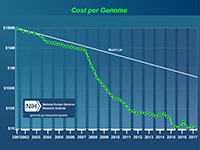
sequencing - cost of: The cost of sequencing a single DNA base [when the Human Genome Project was initiated] was about $10 then; today, sequencing costs have fallen about 100-fold to $.10 to $.20 a base and still are dropping rapidly. [Human Genome News 11 (1-2) Nov. 2000]  http://www.ornl.gov/hgmis/publicat/hgn/v11n1/01giants.html 

sequencing - high- throughput: Uses robotics, automated DNA- sequencing machines and computers.

shotgun sequencing  method: Sequencing method which involves randomly sequencing tiny cloned pieces of the genome, with no foreknowledge of where on a chromosome the piece originally came from. This can be contrasted with "directed" [sequencing] strategies, in which pieces of DNA from adjacent stretches of a chromosome are sequenced. Directed strategies eliminate the need for complex reassembly techniques. Because there are advantages to both strategies, researchers expect to use both random (or shotgun) and directed strategies in combination to sequence the human genome. [DOE] 

Uses dynamic programming methods. 

Narrower terms: chromosome-specific shotgun sequencing, protein shotgun sequencing, whole genome shotgun sequencing, YAC shotgun sequencing; Related term: full shotgun coverage

Shotgun sequencing comes of age, Tabitha Powledge, Scientist Dec. 31, 2002 http://www.biomedcentral.com/news/20021231/06 Hybrid of whole genome shotgun and clone- by- clone approach is probably best.

similarity: Functional genomics glossary  

similarity search: BLAST, FASTA and Smith- Waterman are examples of similarity search algorithms.

single base extension array: Single Base Extension [SBE] or mini- sequencing, was one of the first genotyping technologies developed, and it is categorized as a type of primer extension method. SBE is very similar to DNA sequencing, with the exception that only one base (the polymorphic base or SNP) is queried, while sequencing can identify up to several hundred bases and determine their relative order. The system is cheaper and can be performed in higher throughput than traditional sequencing. CHA Cambridge Healthtech Advisors, Clinical Genomics: The Impact of Genomics on Clinical Trials and Medical Practice report, 2004

single DNA molecule sequencing:  The evolution of technology for single DNA molecule sequencing will ultimately permit whole genome analysis of populations of cells at high resolution and will obviate current PCR- based approaches, particularly important for sequencing diploid or polyploid cells. This is the ultimate in sensitivity, and perhaps difficulty. Further in the future, it might be possible to utilize the protein synthesis machinery of the cell as a "sequencing engine."   National Center for Research Resources "Integrated Genomics Technologies Workshop Report" Jan 1999

Smith-Waterman alignment: An amino acid sequence alignment that illustrates sequence similarity. The alignment is generated using the Smith- Waterman algorithm (Temple Smith and MS Waterman, J Mol Biol. 147: 195-197, 1981; WR Pearson  Genomics 11:635-650, 1991) [SGD Saccharomyces Genome Database glossary, Stanford Univ.] http://genome-www.stanford.edu/Saccharomyces/help/glossary.htm

Related terms dynamic programming; Algorithms glossaryIn silico & Molecular modeling glossary

templates: Used for sequencing generally come in two forms: 1) PCR products and 2) cloned DNA. PCR (polymerase chain reaction) products are derived by the PCR process where a specific but minute portion of the genome is selectively amplified 1 billion- fold from the source DNA (usually a complete genome). PCR products are generated when only a small but discrete portion of the genome needs to be analyzed in hundreds or thousands of individuals. ... DNA clones are derived from cutting large portions of DNA (sometimes a complete genome) into discrete fragments that are "cloned" or inserted into DNA vectors. ... A single DNA fragment is inserted into a vector and transferred into a host (generally E. coli bacteria) where the vector and the DNA fragment replicate as the host replicates, thus producing mass quantities of a single DNA fragment that can be purified from the host.  CHI High Throughput Genomics Report  2001

vertical sequencing: Among the many proposed concepts for sequencing DNA using mass spectrometry, the most successful has been to combine Sanger cycle sequencing with MALDI-TOF-MS (1,2,412). Four nucleobase- specific oligonucleotide ladders are generated in separate reaction vials, which are then separated and detected inside the mass spectrometer. The sequence is determined by comparing the recorded spectra (vertical sequencing). Eckhard Nordhoff,a Christine Luebbert, Gabriela Thiele, Volker Heiser, and Hans Lehrach, Rapid determination of short DNA sequences, Nucleic Acids Res > v.28(20); Oct 15, 2000  http://www.pubmedcentral.gov/articlerender.fcgi?artid=110802 

Related term: horizontal sequencing

viral genotyping: Genomic data is enabling researchers to predict a patient's response to therapy based on the viral genotype for viral infections. HIV genotyping is an early example of how treatment decisions are made based on the genotype of the virus. 

viral homology: See under sequence homology- nucleic acid

whole genome shotgun sequencing: Celera’s whole genome shotgun sequencing technique involves sequencing from both ends of the double stranded cloned DNA. Celera’s accurately paired clone end sequences are a key tool for assembling the genome much more completely than single stranded sequencing methods allow at comparable levels of sequence coverage. Celera’s paired end- sequencing strategy, as part of the whole genome shotgun sequencing technique, has now produced sequence pairs from clones that cover the human genome 11 times. The company believes that 99% of the human genome is represented in the cloned DNA. ["Celera Genomics completes sequencing phase of the genome from one human being" press release, Rockville, MD,  April 6, 2000]  http://www.pecorporation.com/press/prccorp040600.html  

Broader term shotgun sequencing method.

"working draft, human genome sequence": This site contains a working draft of the human genome, which is over 90% complete. Approximately half of the sequence is in a highly accurate 'finished' state. The other half is merely 'draft' quality. Some care must be taken interpreting draft regions, but these are still often very useful to the working scientist. We encourage you to explore the working draft with the genome browser, which displays the work of many annotators worldwide. Human Genome Project Working Draft, Univ. of California, Santa Cruz, US http://genome.ucsc.edu/

This milestone was announced at the White House (Washington DC, US) on June 26, 2000.  President Bill Clinton was joined by Francis Collins (National Human Genome Research Institute) and Craig Venter (Celera Genomics) and heads of the major US genome sequencing centers. Work continues to be done on annotating the sequence, but further celebration ensued with publication of two versions of the sequence in Feb. 2001.  

Related terms: draft sequence, finished sequence - human, published working drafts; Genomics glossary  Human Genome Project 

Bibliography
DNA Sequencing glossary, Geospiza, Inc., 2002, 26 definitions. http://www.geospiza.com/support/glossary.htm 
NCBI (US) BLAST Glossary, 2000. 40+ definitions http://www.ncbi.nlm.nih.gov/Education/BLASTinfo/glossary2.html
Human Genome Project Information, Facts about Genome Sequencing, Oak Ridge National Lab, US, 2002 http://www.ornl.gov/hgmis/faq/seqfacts.html

Alpha glossary index

How to look for other unfamiliar  terms

IUPAC definitions are reprinted with the permission of the International Union of Pure and Applied Chemistry.

Contact | Privacy Statement | Alphabetical Glossary List | Tips & glossary FAQs | Site Map